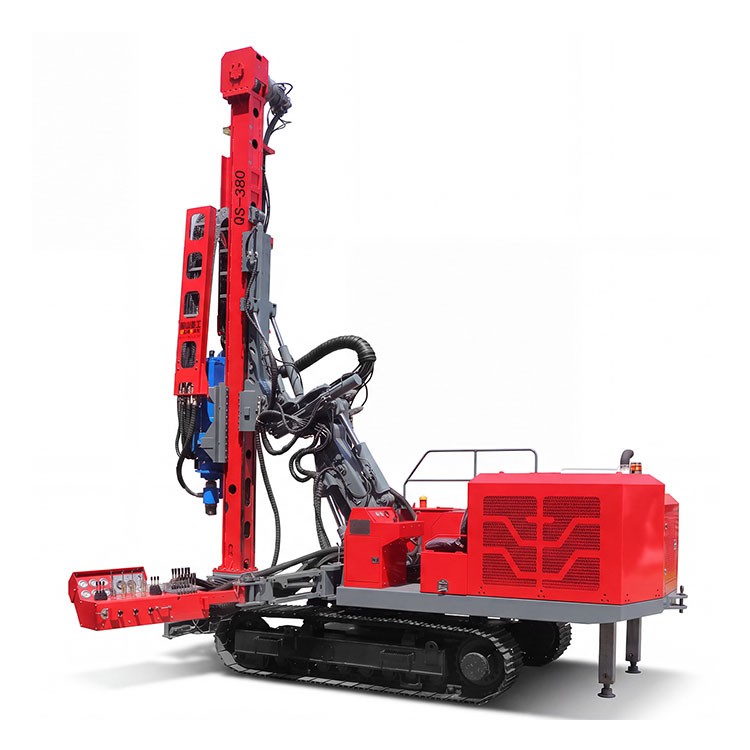
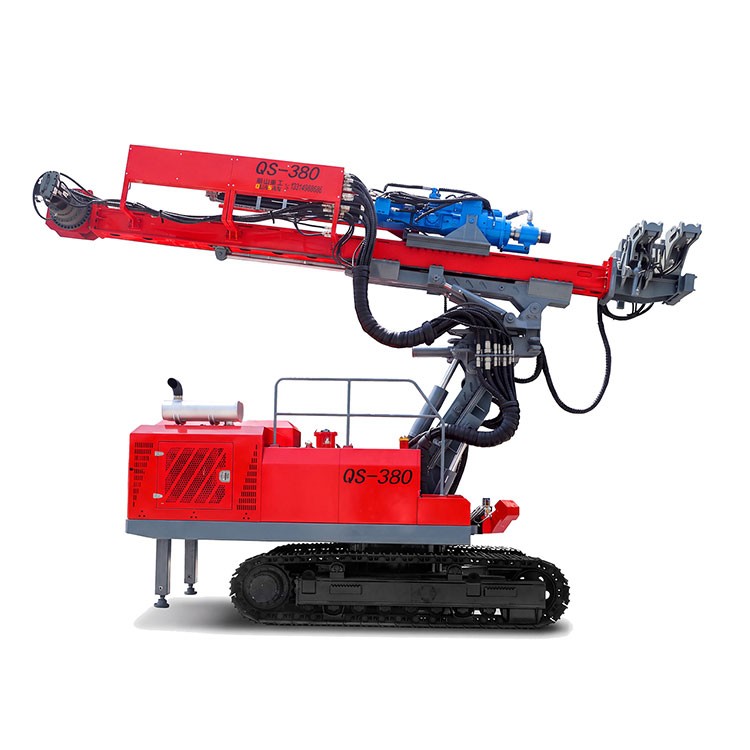
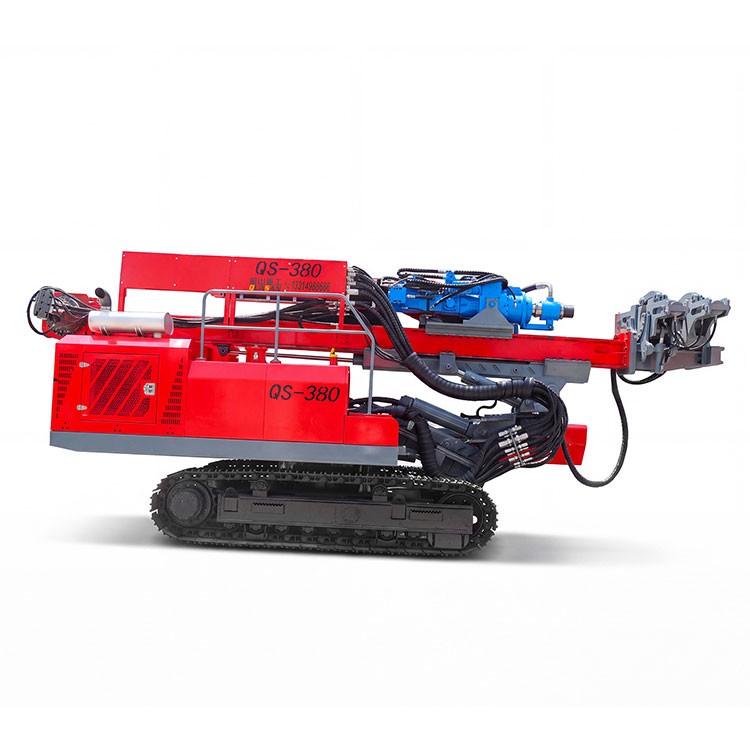
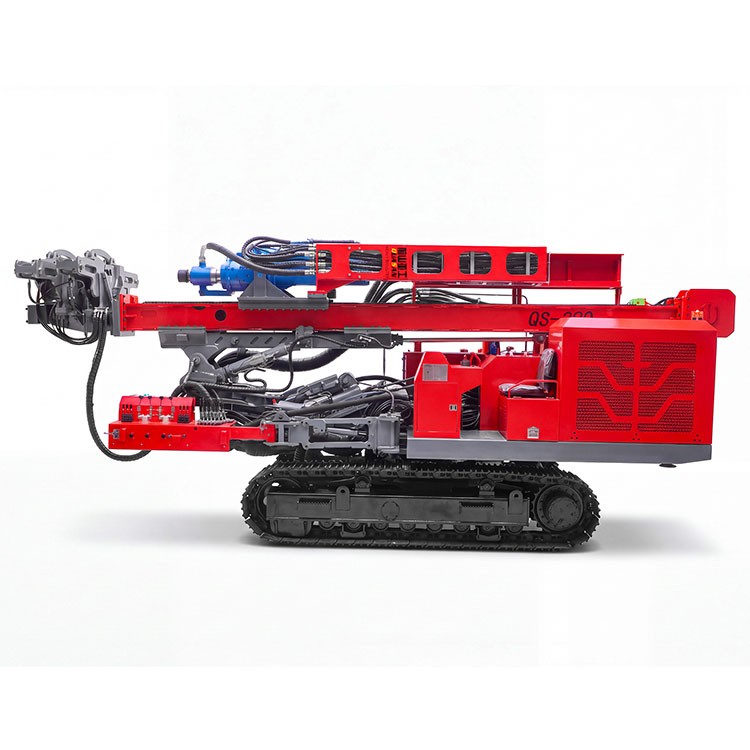
The QUASAN QS-380 Fully Hydraulic Crawler Drilling Rig is designed for demanding drilling applications in foundation engineering, geotechnical construction, and underground projects.
The QUASAN QS-380 Fully Hydraulic Crawler Drilling Rig is designed for demanding drilling applications in foundation engineering, geotechnical construction, and underground projects. With a focus on operational flexibility, drilling performance, and adaptability to different working conditions, the QS-380 is intended to support contractors working on complex ground engineering projects.
From deep foundation pit support and anti-floating anchor installation to rock and soil anchoring, jet grouting pilot holes, and tunnel pipe roof pre-support, the QS-380 can be configured to meet project-specific drilling requirements.
For contractors looking for a versatile hydraulic drilling rig, selecting the right configuration starts with understanding the geological conditions, drilling method, hole diameter, required depth, and available working space.
The QUASAN QS-380 is positioned as a crawler-mounted hydraulic drilling rig for foundation construction and geotechnical engineering applications. Its product positioning focuses on supporting drilling operations where flexible equipment configuration and reliable performance are important.
A crawler drilling rig can be particularly useful on construction sites where equipment needs to move between drilling positions. Depending on the selected configuration, the rig may be adapted to different drilling angles, tooling arrangements, and ground conditions.
For engineering contractors, the main consideration is not simply the machine itself. It is how the drilling rig, power head, drill pipes, casing system, and auxiliary equipment work together to meet the requirements of the project.
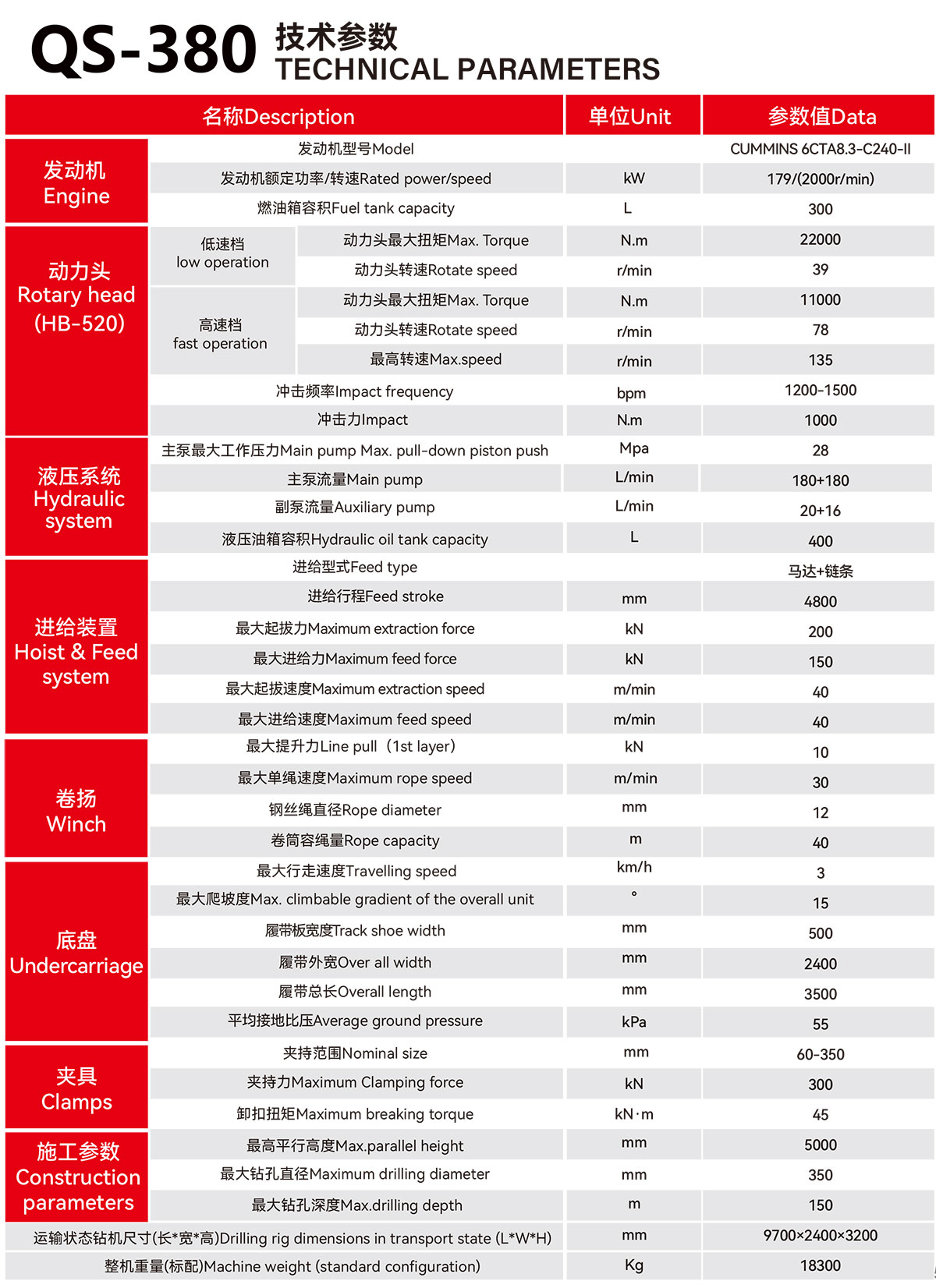
A hydraulic drilling system provides controlled power transmission for drilling, feeding, lifting, and other machine functions. Appropriate hydraulic control helps operators coordinate these movements according to the drilling method and ground conditions.
For foundation and geotechnical projects, operating flexibility is important because drilling requirements can change between locations, angles, and geological layers.
Rotary-impact drilling combines rotational movement with percussion to help break and penetrate difficult ground formations. Depending on the power-head configuration and drilling tools, this method can be suitable for applications involving gravel, fractured formations, and other challenging geological conditions.
The selection of a suitable drilling method should be based on site investigations, formation characteristics, hole specifications, and project requirements.
The crawler undercarriage supports movement around suitable construction sites and between drilling positions. This mobility can be valuable on foundation projects, slopes, and other work areas where conventional wheeled equipment may be less practical.
Actual mobility and climbing capability depend on the machine configuration, ground bearing capacity, terrain, and site conditions. Safe access and operating-platform preparation remain essential.
Different engineering projects require different drilling tools, casing arrangements, and operating methods. A properly configured hydraulic drilling rig can be matched to the requirements of the intended application.
Before selecting the QS-380, contractors should confirm the required hole diameter, drilling depth, drilling angle, casing method, and compatible tooling with the QUASAN technical team.
The QS-380 product page should be matched to its confirmed technical configuration. The following are relevant application categories for this type of hydraulic drilling equipment, subject to verification of QS-380 compatibility.
Foundation pit projects often require drilling for ground anchors, soil nails, or other support systems. Equipment selection depends on excavation depth, soil and rock conditions, drilling direction, and available working space.
A suitable crawler drilling rig can support drilling operations for foundation pit reinforcement and associated geotechnical work.
Anti-floating anchors and anti-uplift foundation systems are used in certain underground structures to resist groundwater uplift forces.
Drilling equipment for these projects must meet the specified hole diameter, depth, alignment, and installation requirements. The suitability of the QS-380 for anti-floating anchor drilling should be confirmed against the project design and machine specifications.
High-pressure jet grouting is used for ground improvement, soil reinforcement, and selected seepage-control applications.
A drilling rig may be used to prepare pilot holes for the jet grouting process. The drilling equipment and the high-pressure grouting system perform different functions, so the required rig configuration and auxiliary equipment must be assessed separately.
Rock and soil anchoring is commonly used for slope stabilization, foundation reinforcement, and selected retaining structures.
The drilling rig must accommodate the required hole direction, depth, drilling method, and ground conditions. Appropriate tooling and equipment configuration are essential for consistent drilling operations.
Pipe roof pre-support is used in certain tunneling and underground construction projects to establish a protective support system ahead of excavation.
Drilling equipment for pipe roof applications must be selected according to tunnel clearance, drilling alignment, pipe dimensions, geological conditions, and the construction sequence. Confirm the QS-380's compatibility with the required pipe roof drilling arrangement before specifying it for a project.
Choosing a hydraulic crawler drilling rig requires more than comparing model names. Contractors should provide the following information when requesting a quotation or technical recommendation:
Geological conditions: Soil, gravel, cobbles, fractured rock, or mixed formations.
Drilling depth: The required depth for each hole and the total drilling workload.
Hole diameter: The specified diameter and any casing requirements.
Drilling method: Rotary drilling, rotary-impact drilling, casing drilling, or another approved method.
Working environment: Foundation pits, slopes, tunnels, restricted-access sites, or open construction areas.
Auxiliary equipment: Drill pipes, casing systems, drilling tools, grouting equipment, and other required accessories.
Providing these details enables the QUASAN team to evaluate equipment compatibility and recommend a suitable configuration for the intended application.
QUASAN Heavy Industry focuses on crawler drilling rigs and related equipment for foundation engineering, anchoring, and geotechnical construction.
When evaluating a drilling rig supplier, buyers should consider equipment configuration, application experience, spare parts availability, technical communication, and after-sales support. These factors can influence equipment utilization and long-term operating costs.
QUASAN works with customers to understand their drilling requirements and identify suitable equipment solutions for their projects.
The QS-380 is being positioned for foundation and geotechnical drilling applications. Specific uses, including foundation pit support, anti-floating anchors, jet grouting pilot holes, rock anchoring, and tunnel pipe roof drilling, should be confirmed against its final technical specification.
Drilling capability depends on the machine's power-head configuration, drilling tools, casing system, and geological conditions. Contractors should provide site information to determine whether the QS-380 is suitable for gravel, fractured rock, mixed formations, or other challenging ground.
Suitability depends on the required hole depth, diameter, drilling angle, site clearance, and support-system design. The machine's verified operating parameters should be checked before project selection.
A drilling rig may be used for pilot-hole drilling in jet grouting projects when its configuration is compatible with the required process. The drilling system and high-pressure grouting equipment must be evaluated according to the project specifications.
Contact QUASAN Heavy Industry with your target drilling depth, hole diameter, geological conditions, drilling method, and project location. The technical team can confirm the available QS-380 specifications and recommend an appropriate configuration.
Looking for a hydraulic crawler drilling rig for foundation construction or geotechnical engineering?
Contact QUASAN Heavy Industry to discuss your project requirements and confirm the technical specifications, available configurations, and application suitability of the QS-380 drilling rig.
Contact: Mr.Lan
Phone: +86-13314988686
E-mail: info@quasan.cn
Add: Unit 1, Building 9, High-Performance Industrial Equipment Industrial Park, Xiamei Town, Nan'an City, Fujian Province

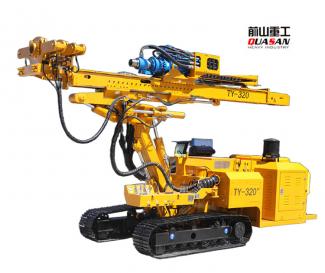

 QUASAN
